Trying to tell the five Pacific salmon species apart? Chinook, coho, sockeye, pink and chum differ in size, lifespan and where they spawn. This guide sets them side by side so you know what you might meet.
This is one part of a wider look at fishing in canada, focused on the fish themselves.
| Species | Key fact |
|---|---|
| Chinook | World record 57.27 kilograms (126 pounds) |
| Pink | Two-year lifespan |
| Chum | Most spend two or three summers at sea |
| Coho | Most return to fresh water at three years of age |
| Sockeye | Young may stay a year or more in nursery lakes |
These figures come from Fisheries and Oceans Canada’s Pacific salmon information page. Numbers like these can change, so check the source before you rely on them.
Chinook: the biggest of the Pacific salmon species
The chinook is the largest of the Pacific salmon, and Fisheries and Oceans Canada (DFO) gives the world record as 57.27 kilograms (126 pounds). Fish over 14 kilograms (30 pounds) are dubbed “Tyee”. The same page says chinook are also called king, spring, blackmouth, quinnat and chub.
Chinook spawn in large rivers from California to Alaska, but DFO says they use a relatively small number of streams in BC and the Yukon. The Fraser River is the most important chinook system in BC. The age of adults returning to spawn varies from two to seven years.
The Encyclopedia of BC counts a Tyee as a fish over 13.5 kg, so the cut-off differs slightly by source. It also records the largest rod-caught chinook, taken in the Skeena in the 1950s, at 41.4 kg.
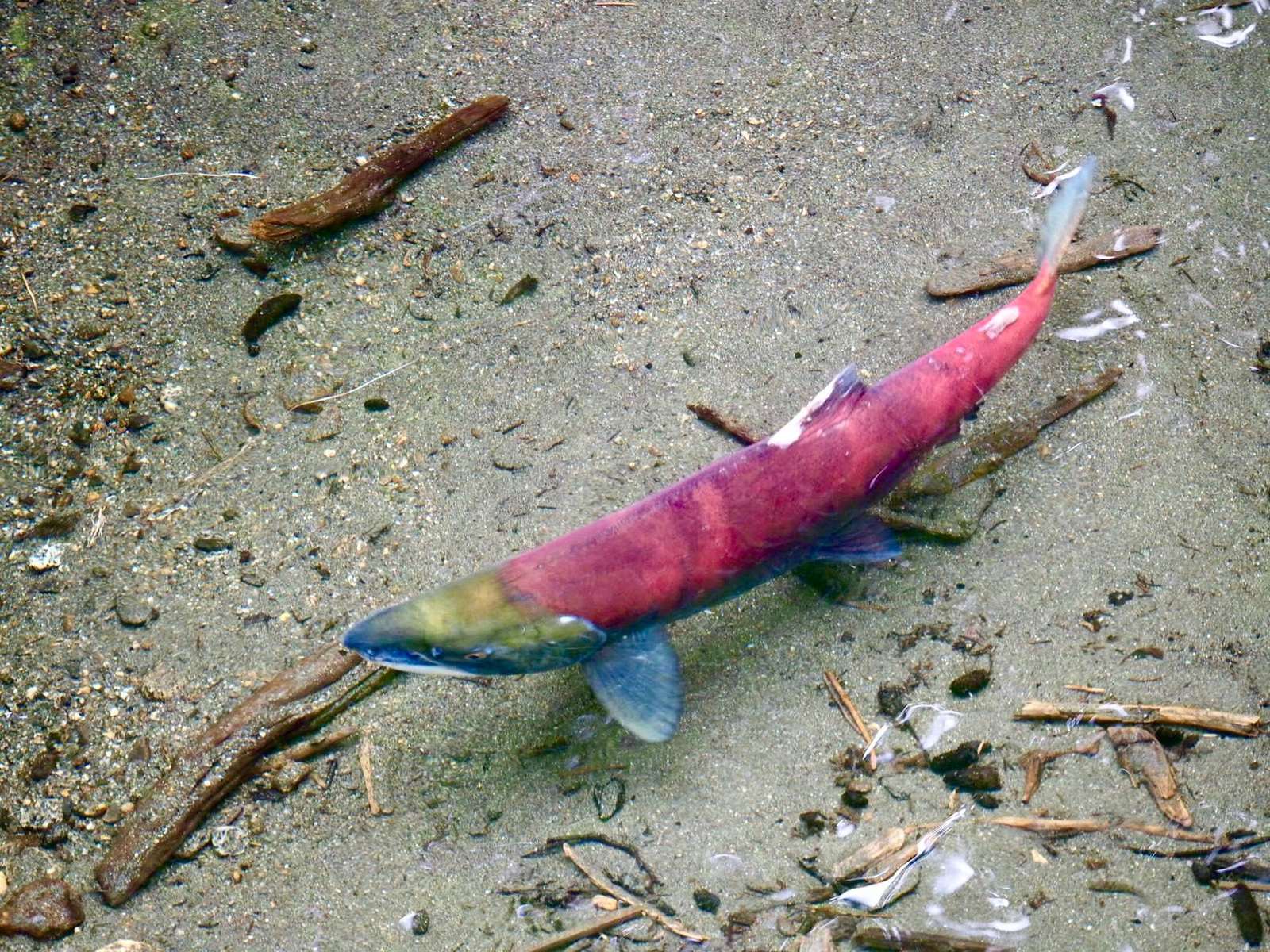
Chinook are unusual because adult flesh can range in colour from white through pink to deep red. That means the colour of the meat will not tell you the species.
Coho and sockeye: two different freshwater lives
The coho is the species most closely tied to small water. DFO says juveniles favour small streams, sloughs and ponds, and that coho spawn in over half of the 1500 streams in BC and Yukon for which records are available. There are more distinct coho populations than for any other Pacific salmon in BC.
According to DFO’s species notes, most coho return as mature adults at three years of age. Some come back early as “jacks” at only two years. At sea, adults have silvery sides and a metallic blue back with irregular black spots, and they have been found as far as 1600 km from shore.
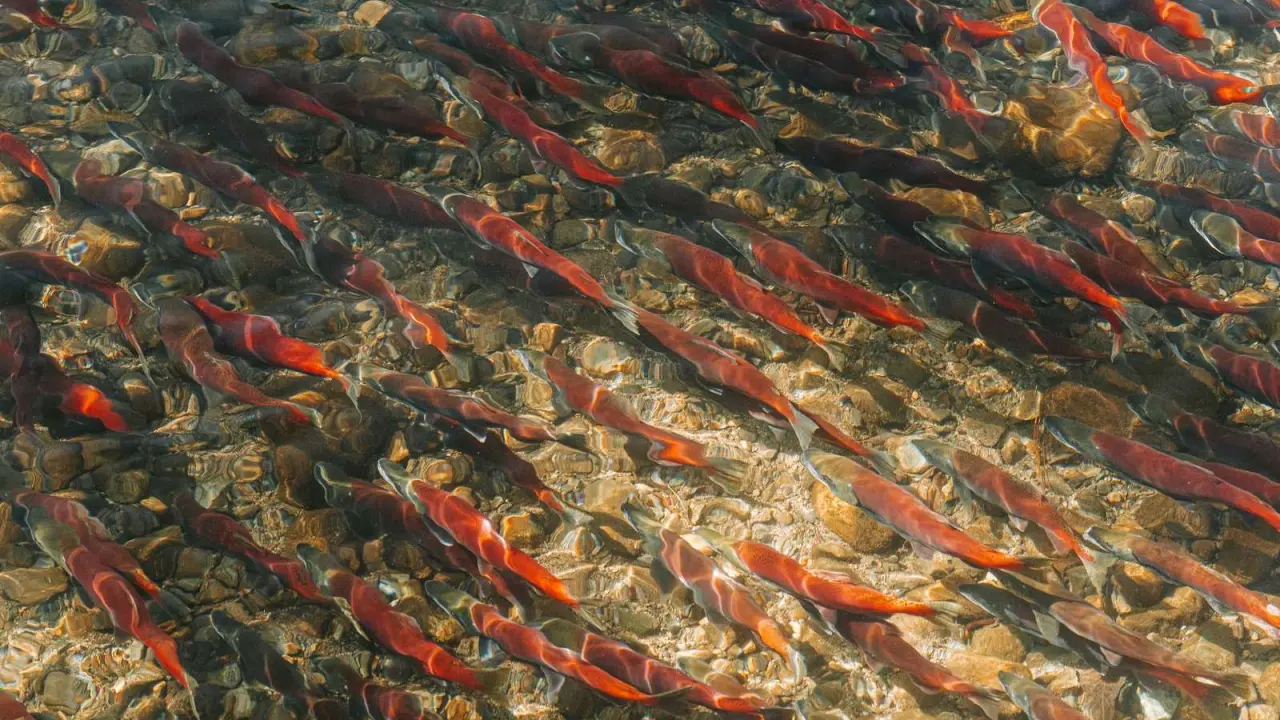
The sockeye depends on lakes. DFO says most BC and Yukon sockeye spawn in late summer or fall in lake-fed systems. Young sockeye may remain in their nursery lakes for a year or more, and some wait until their second or third year to head to sea.
- Major sockeye runs are found in the Fraser, Skeena, Nass, Stikine, Taku and Alsek watersheds, according to DFO.
- The Encyclopedia of BC gives an average adult weight of 1.8-2.3 kg, though some reach up to 7 kg.
- The same source says kokanee are freshwater-resident sockeye that do not migrate to salt water.
Pink and chum: short lives, big numbers
The pink salmon has the shortest life of the group, with a two-year lifespan according to DFO. Fry enter the ocean right after they emerge from the gravel in spring, and the males develop the humped back that gives the species the nickname “humpies”.
Pinks are also the smallest species. The Encyclopedia of BC gives an average adult weight of 1-2.5 kg. DFO notes that their pink flesh comes from a diet rich in zooplankton, especially krill.
The chum, or dog salmon, is the widest-ranging of the group. DFO says that in BC and the Yukon, chum spawn in more than 880 medium-sized streams and rivers, and most spend two or three summers at sea. The Encyclopedia of BC puts their average weight at maturity at 5 kg, with many over 9 kg.
Chum are the poorest jumpers of the Pacific salmon, so waterfalls that do not stop other species can block them. In short coastal streams their fry move directly to the sea after emerging in spring.
How to tell the five apart
Colour changes with the life stage, so a fish in the ocean looks different from the same species in a spawning stream. DFO’s descriptions give you a starting checklist:
- Chinook: the body darkens and a reddish hue develops around the fins and belly as they approach fresh water.
- Coho: silvery sides and a metallic blue back with irregular black spots at sea.
- Sockeye: silver with small black speckles in the ocean, but the red spawning fish is the one most people remember.
- Pink: both sexes change from blue and silver to a pale grey when spawning.
- Chum: spawners show a dark horizontal stripe, a checkerboard or calico pattern and, in large males, canine-like teeth.
Colours and markings overlap, so confirm identification with DFO’s recreational salmon identification pages before you keep a fish. Check the current DFO fishing regulations for the water you plan to fish.
Which species do anglers chase?
DFO calls the chinook a favourite in the recreational fishery, and the Encyclopedia of BC calls the coho a favourite species with anglers. DFO says the sockeye is the most sought after for its flesh, colour and quality. Chum is described as the least sought-after, though it has long been a food staple for coastal peoples.
Rivers matter as much as species. The skeena river appears in both sources: it is one of the major sockeye watersheds, and it produced the record rod-caught chinook above. If you came looking for steelhead, which this list does not cover, see steelhead fishing in bc.
Frequently asked questions
Which Pacific salmon is the biggest?
Show answer
The chinook. DFO gives the world record as 57.27 kilograms (126 pounds), and the pink is the smallest, with an average adult weight of 1-2.5 kg according to the Encyclopedia of BC.
Which Pacific salmon lives the shortest time?
Show answer
The pink, which completes its whole life in two years. Chinook adults, by comparison, return to spawn at ages from two to seven years.
Are kokanee and sockeye the same fish?
Show answer
They are the same species. The Encyclopedia of BC describes kokanee as freshwater-resident sockeye that do not migrate to salt water.
How many species of salmon does the Encyclopedia of BC list?
Show answer
It recognises seven. Five are covered here: pink, chum, coho, sockeye and chinook. The other two it names are masu and amago.