Wondering about steelhead vs rainbow trout? They’re the same species, Oncorhynchus mykiss. The difference is life history: rainbow trout stay in fresh water, while steelhead go to sea and return to spawn.
If you are still getting oriented, the wider fly fishing hub covers the basics around species like these.
| Item | Value |
|---|---|
| Species | Rainbow trout and steelhead are the same species |
| Rainbow trout life | Spend their lives mostly or entirely in freshwater |
| Steelhead freshwater and ocean time | Two to three years in freshwater, then two to three years in the ocean |
| Typical weight | 8 pounds (3.6 kilograms); can exceed 50 pounds (22 kilograms) |
| Spawning more than once | Steelhead can; they do not necessarily die after spawning |
Figures come from the National Wildlife Federation and NOAA Fisheries. They can change, and sizes and ages vary by river, so check the sources before you rely on them.
Are steelhead and rainbow trout the same fish?
Yes. The National Wildlife Federation states it plainly: rainbow trout and steelhead are the same species, but they have different lifestyles. NOAA Fisheries words it a little differently, calling steelhead a unique life-history type of rainbow trout.
So the name “steelhead” describes what a fish does, not what it is genetically. A rainbow trout that never leaves its stream and a steelhead that spends years at sea belong to one species, which is why anglers sometimes argue over the labels.
What really separates them: the trip to the ocean
NOAA Fisheries says that fish that stay in fresh water all their lives are called rainbow trout, and that steelhead are the anadromous form, meaning they migrate to the ocean. Both start the same way: according to NOAA, all wild steelhead hatch in gravel-bottomed, fast-flowing, well-oxygenated rivers and streams.
The National Wildlife Federation describes the steelhead pattern as two to three years in freshwater followed by two to three years in the ocean. Then the fish return to a river to breed. Females dig a depression called a redd in the gravelly bottom of a stream riffle.
Steelhead also differ from most of their relatives after spawning. NOAA notes that, unlike most other Pacific salmonids, steelhead are iteroparous: they do not necessarily die after spawning and can spawn more than once. Many return to the ocean and come back to fresh water in later years.
How can you tell one from the other by sight and size?
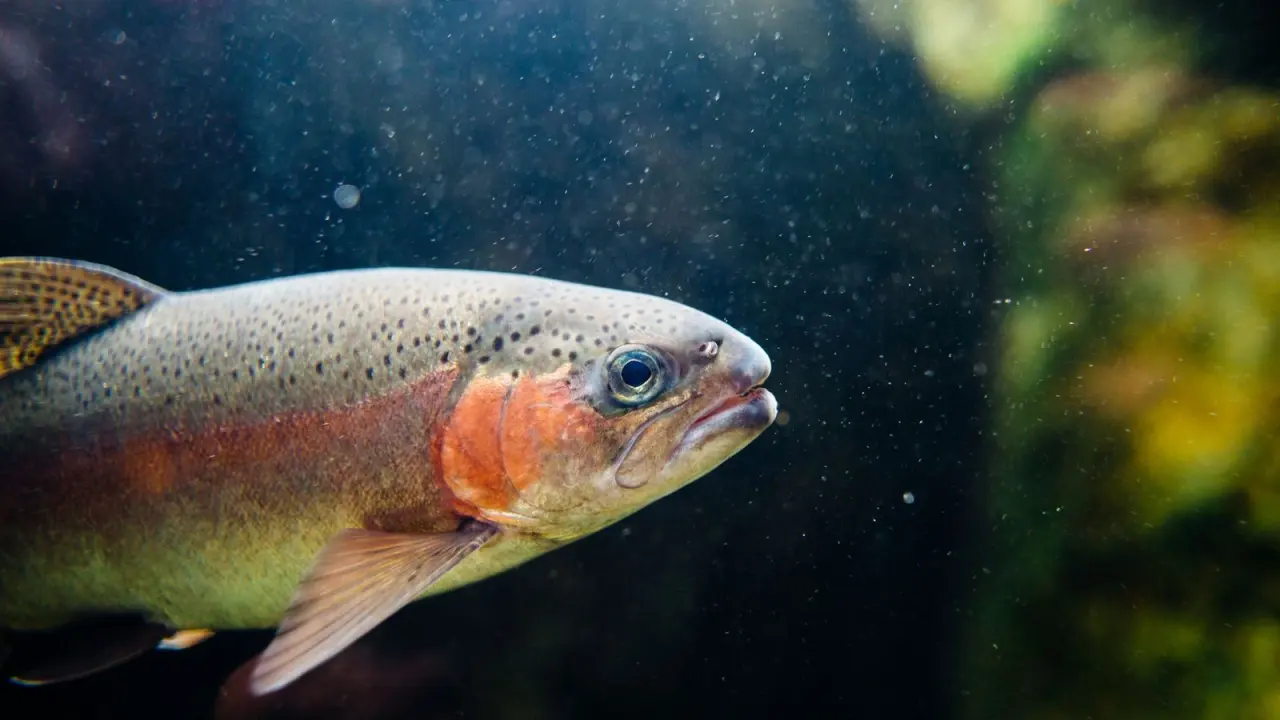
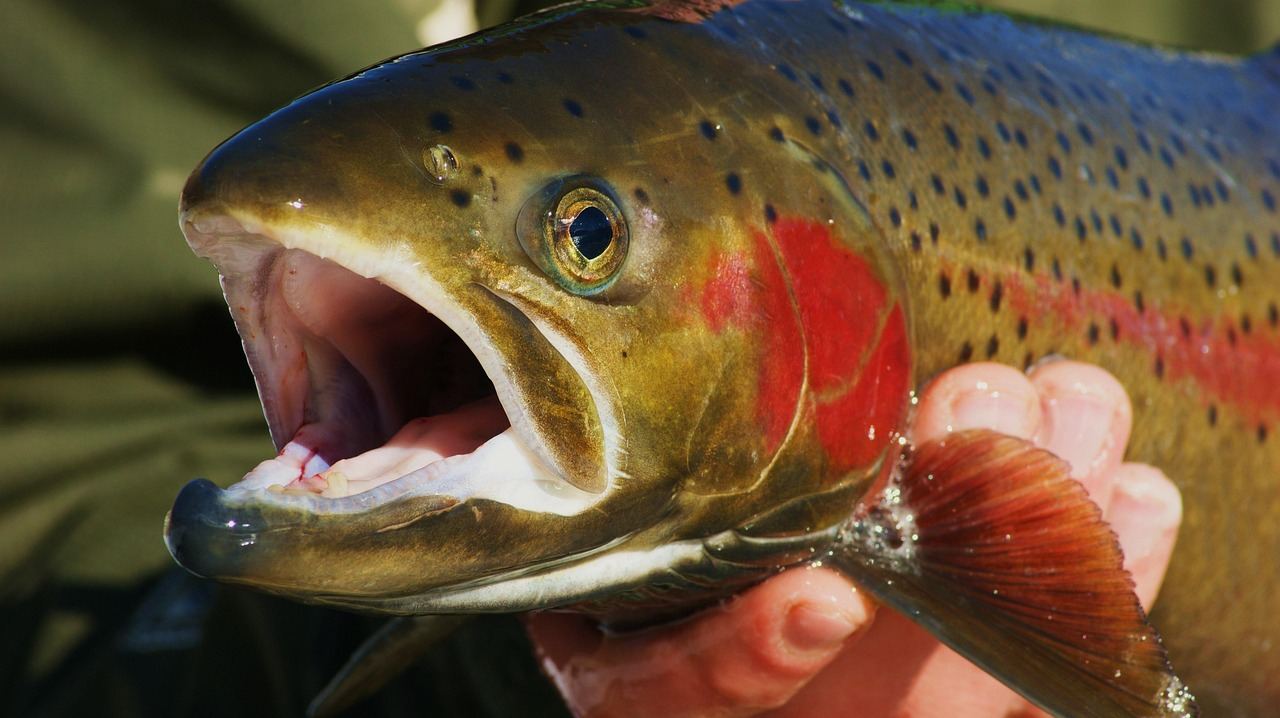
The different lifestyles show up in the fish. According to the National Wildlife Federation, the most noticeable differences are size and colour. Rainbow trout take their name from their multi-hued colouring, while steelhead are generally more streamlined and silvery or brassy as adults.
Size follows time at sea. NOAA Fisheries says steelhead that migrate to the ocean typically grow larger than individuals that remain in freshwater.
The National Wildlife Federation gives the overall range for adults of both forms:
- A more typical weight is 8 pounds (3.6 kilograms).
- They can weigh more than 50 pounds (22 kilograms).
- Steelhead are generally the larger of the two, because of the years spent in the ocean.
Those are broad figures for the species, not a rule for any one river, so treat them as a guide rather than a way to name a fish.
Why the difference matters when you fish
Both forms are opportunistic. The National Wildlife Federation says rainbow trout and steelhead have a varied diet and will feed on just about anything, from fish eggs and small fish to crustaceans, insects and even mice. That is useful to know as a fly angler, because it means you are not locked into one narrow food source.
Where you find them is a bigger question than what they eat. Both forms start life in gravel-bottomed, fast-flowing rivers, so learning how to read a river for fishing pays off with either. If you have not yet cast a line, how to start fly fishing is a sensible place to build the basics first.
Steelhead are also more varied than the simple “one trip to sea” story suggests. Trout Unlimited reports that steelhead display the greatest combined array of life histories of any salmonid. In one study of wild Klamath River steelhead, researchers found at least 38 different life histories or pathways from hatch to spawn.
One example, also described by Trout Unlimited, is the half-pounder. Steelhead from the Klamath and Rogue rivers in northern California and southern Oregon display this life history, in which fish return from sea only several months after first entering the ocean.
Frequently asked questions
Is a steelhead a salmon?
Show answer
No. Steelhead are anadromous rainbow trout. NOAA Fisheries groups them with salmon as Pacific salmonids, but notes that steelhead can spawn more than once, unlike most of their relatives.
Do steelhead die after spawning?
Show answer
Not necessarily. NOAA Fisheries says that after spawning, many steelhead return to the ocean and then back to fresh water in subsequent years to spawn again.
Do steelhead and rainbow trout eat the same things?
Show answer
Largely, yes. The National Wildlife Federation says both have a varied diet, feeding on zooplankton when young and later on fish eggs, small fish, crustaceans, mollusks, insects and even mice.
Why are steelhead bigger?
Show answer
Time in the ocean. The National Wildlife Federation says steelhead are typically larger than rainbow trout because they spend two to three years at sea after two to three years in freshwater.
What is a half-pounder?
Show answer
It is a steelhead life history seen in the Klamath and Rogue rivers, where fish return from the sea only several months after their first ocean entry, according to Trout Unlimited.