Want catch and release fishing tips that actually keep trout alive? Fish in cool water, play the fish briefly, keep it wet, and use a soft net. Barbless hooks and short air time do the rest.
This guide sits within the wider topic of outdoor recreation, and it focuses on the handling choices that matter most to a released fish.
| Item | Value |
|---|---|
| Common rule-of-thumb water temperature limit for trout angling | About 20°C (68°F) |
| Optimal trout temperature range | Mid 50s to low 60s °F |
| Cutthroat trout mortality as water warmed from 8°C to 16°C | 0 to 8.6% |
| Core practices for lower mortality | Four: temperature limits, proper gear, minimal air exposure and fight time, keeping fish wet |
Figures come from the Ausable Freshwater Center and the Ontario government’s fish handling review. Guidelines and agency thresholds can change, so check the source and your local regulations before you rely on them.
Catch and release fishing tips start with water temperature
The best handling technique cannot fully offset warm water. As water warms, dissolved oxygen drops and fish are less capable of meeting their need for oxygen, which is the root of heat stress.
The Ausable Freshwater Center says most fisheries, agencies and anglers use ~68°F (20°C) as a rule-of-thumb threshold for trout angling. Trout may survive at that temperature, but stress from angling compounds thermal stress. It also notes that the optimal range for trout is the mid 50s to the low 60s.
Ontario’s review of the research says catch-and-release mortality is directly related to water temperature. In one cited study, cutthroat trout mortality increased from 0 to 8.6% as water warmed from 8°C to 16°C.
Northern Ireland’s government guidance uses simple bands:
- Less than 18°C: go salmon and trout fishing with confidence.
- 18 to 20°C: take extra care, because the fish feel the effect of warmer water.
- 20°C: too hot for salmon and trout, according to the nidirect angling guidance.
Carry a thermometer. When in doubt, check the water temperature at the site and choose cooler tributaries or a different species if it is too warm. Low flows matter too: the US National Park Service warns that when flows are low, temperatures high and fish crowded into small areas, fishing can cause additional stress and high mortality.
Cold mornings are a good time to fish for this reason, but they ask something of you as well. If you are planning an early start, read up on how to layer clothing for outdoor activities so wet sleeves and cold hands do not rush your release.
Gear that makes release faster
The goal of gear choice is to shorten the fight and the unhooking. The National Park Service guidance for anglers gives a clear list:
- Flies or artificial lures: fish are generally hooked in the lip, so the hook comes out easily and quickly.
- Single barbless hooks: small, single barbless hooks reduce handling time and injury.
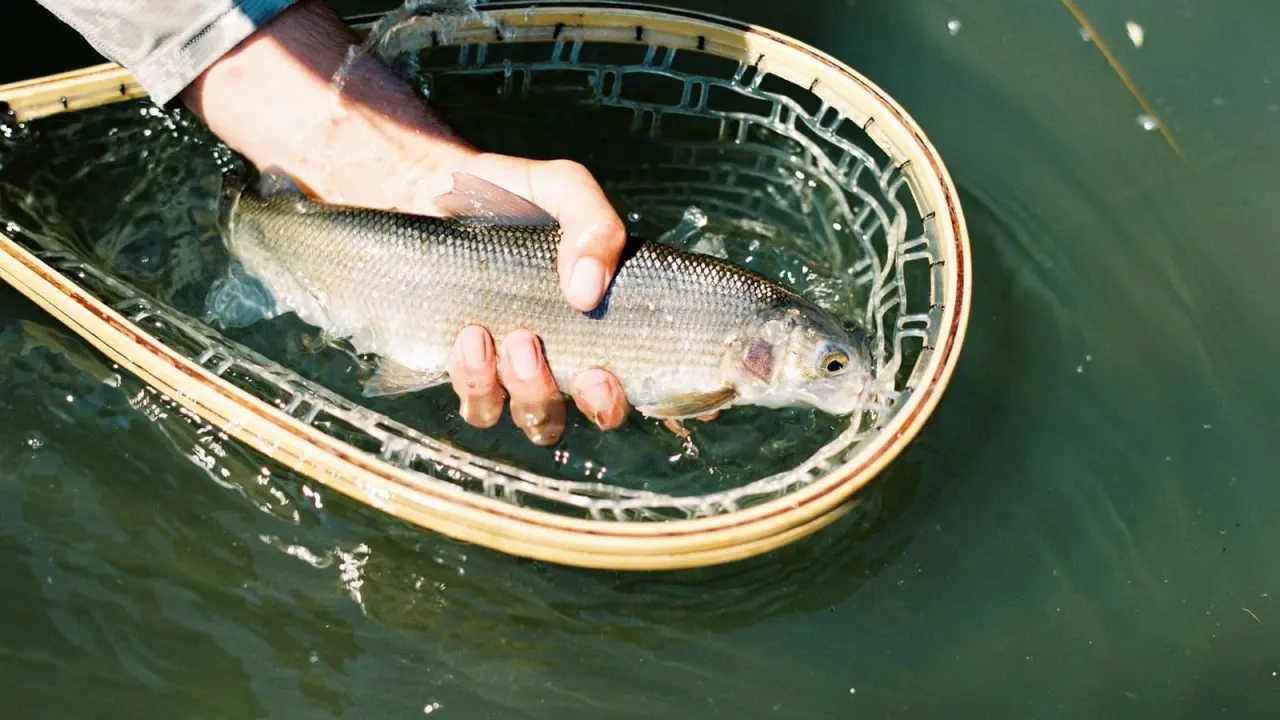
- Soft nets: large net frames with shallow nets of rubber or small, soft, knotless mesh are best.
Ontario’s review points the same way. It says barbless hooks have been demonstrated to reduce handling time through ease of removing the hook, thereby decreasing associated mortality. It also reports a trade-off from one study, in which anglers landed 22% more fish with barbed hooks than with barbless hooks.
You can make a barbed hook barbless yourself. The National Park Service says barbs can be removed by flattening the barb against the hook shank with needle-nosed pliers or fishing hemostats.
Landing and handling the fish
Avoid playing fish to exhaustion and release quickly. The Park Service advises landing the fish as quickly as possible, and says a landing net reduces handling time, stress and the potential for injury, especially for large fish that are hard to manage.
Once the fish is in hand, a few habits protect it:
- Wet your hands or gloves first. The Park Service says this helps reduce the loss of a fish’s protective mucus.
- Support the fish in the net, or cradle it gently with one hand beneath the belly near the water surface.
- Treat the fish gently and avoid squeezing tightly.
- Never hold a fish by the gills.
- Keep the fish in the water as much as possible while you remove the hook.
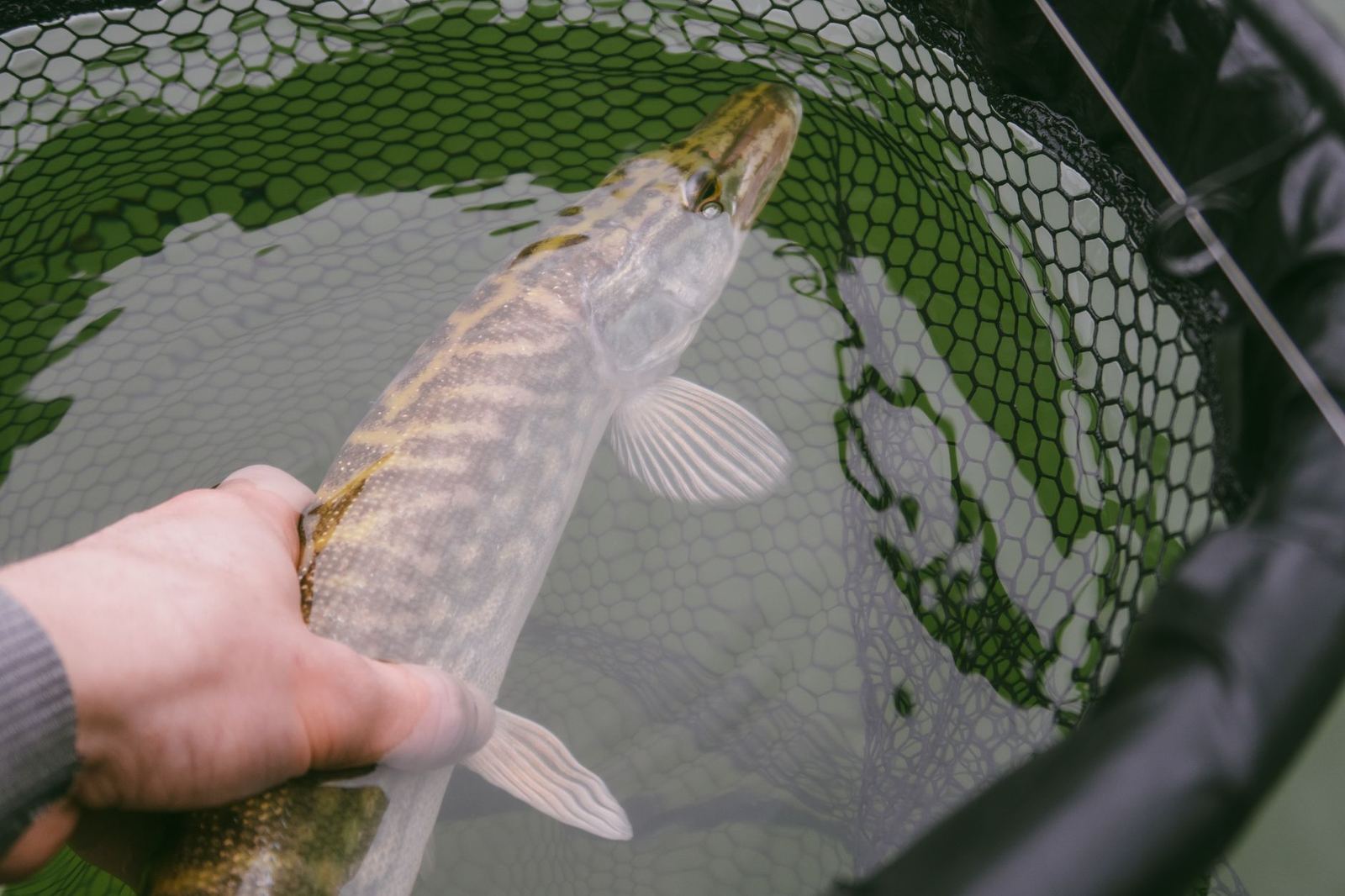
If the hook is deep, the evidence is less tidy. Ontario’s review says it is less clear whether it is better to cut the line of a deeply hooked fish or to try to remove the hook, which risks further injury and more air exposure. The Park Service’s advice on this point is to cut your line as close to the hook as possible.
How long is too long out of the water?
Researchers disagree about exact numbers, but they agree on the direction: less is better. Ontario’s review explains why. Once a fish is landed, air exposure causes the gill lamellae to collapse, causing an almost complete loss of gas transfer.
Field work on air exposure is more forgiving than that sounds. A University of Idaho thesis tested Yellowstone Cutthroat Trout, Bull Trout and Rainbow Trout, and concluded that air exposure has no effect on survival and fitness at up to 60 s. That is a ceiling for the outcomes measured in that study, not a target.
Warm water, big fish and exhausted fish are where extra caution belongs, and a photo can wait. A practical approach is to decide before you land the fish what you want, whether that is a quick measurement or a photo, and to have the camera ready. Then keep the fish low over the water, so a slip means a splash rather than a drop.
Check the rules where you fish, too. Ontario’s limits and release page, for example, says some fish must be immediately released in the manner that causes the least harm to the fish, and fish you don’t release right away count toward your limits. Making release the default also fits the leave no trace principles mindset of leaving the river as you found it.
Reviving and releasing
A tired fish may need a moment before it can swim off. The National Park Service says that if the fish has difficulty regaining its strength, face it into the current so fresh oxygenated water can pass gently over the gills, helping the fish catch its breath. Then let it swim forcefully away on its own.
In fast water, consider moving the fish to calmer water where it can recover without being swept away or injured by turbulent flow. The aim in every case is a fish that leaves under its own power.
Fish brought up from deep water are a separate case. The Park Service explains that dissolved gases come out of solution and cause the swim bladder to expand, so anglers who fish deep should learn the correct recovery method, such as a fish descender, before they need it.
Frequently asked questions
What is the maximum water temperature for catch and release trout fishing?
Show answer
No single cut-off applies everywhere, so check local rules. Around 20°C is the usual line anglers and agencies draw, and the cooler 18 to 20°C range calls for extra care. See the temperature section above for the sources.
Do barbless hooks really help fish survive?
Show answer
They help mainly by making the hook easier and quicker to remove. The trade-off is that one study found anglers landed more fish with barbed hooks, so expect to lose a few more.
Should I wet my hands before touching a fish?
Show answer
Yes. The National Park Service says using wet hands or gloves helps reduce the loss of a fish’s protective mucus.
What if the fish will not swim away?
Show answer
Face it into the current so water flows over its gills, and keep supporting it until it swims off forcefully on its own. In fast water, move it to calmer water first.