River wading safety comes down to a few habits: read the water before you step, move slowly on a wide base, and carry a staff. If the water feels too deep or too fast, trust that instinct and stay out.
This guide is part of the wider topic of outdoor recreation, and it covers the basics for moving water.
| Item | What the sources say |
|---|---|
| Wading belt | Next to a PFD, the most important piece of gear to wear with waders |
| Wading staff contact points | Three points of contact standing still, two when lifting a foot |
| Staff position | On your downstream side |
| Depth rule of thumb | Don’t wade in water over your calf |
| One park’s flow ceiling | No water-based activities recommended above 8,000 cfs |
The figures come from Orvis’s moving-water wading guide and the National Park Service’s Chattahoochee flow-rate page. Guidance can change, so check the source before you rely on any figure.
Why shallow, fast water still catches people out
It is easy to assume you only need to worry about deep pools. Orvis says that fast water does not have to be deep to pull your feet out from under you, and that knee-deep water can sweep you off your feet if it is fast enough or the bottom is slippery enough.
Once you are down, the problem gets worse. A fall in any depth or current can fill your waders with water, which can cause you to sink or be pulled downstream into deeper water, according to the same Orvis guide.
MidCurrent offers a blunt rule of thumb: “don’t wade in water over your calf.” It adds that you should follow any instinct that says the water is too deep or too fast, and that no fish is worth drowning for.
Reading flow numbers without trusting them blindly
Gauge readings in cubic feet per second (cfs) are useful, but they are not a wading verdict. The Angler’s Covey explains that the same flow can feel very different depending on river width, because a narrower channel pushes the same volume into deeper water. In its words, wading in that flow changes in difficulty depending on the width of the river.
Official numbers are mostly about recreation in general, not wading. The Chattahoochee River National Recreation Area says it does not recommend any water-based activities when the flow rate is above 8,000 cubic feet per second, and it warns that with a rapid increase in flow you can easily be swept off your feet while wading. That ceiling is one park’s figure for one river, so don’t carry it to other water.
A practical way to use a gauge:
- Note the reading on a day you wade comfortably, so you have a personal reference for that river.
- Treat a sharp rise as a reason to leave, even if the water still looks fishable.
- Remember that a number from a different river tells you little.
River wading safety on the move: footing and balance
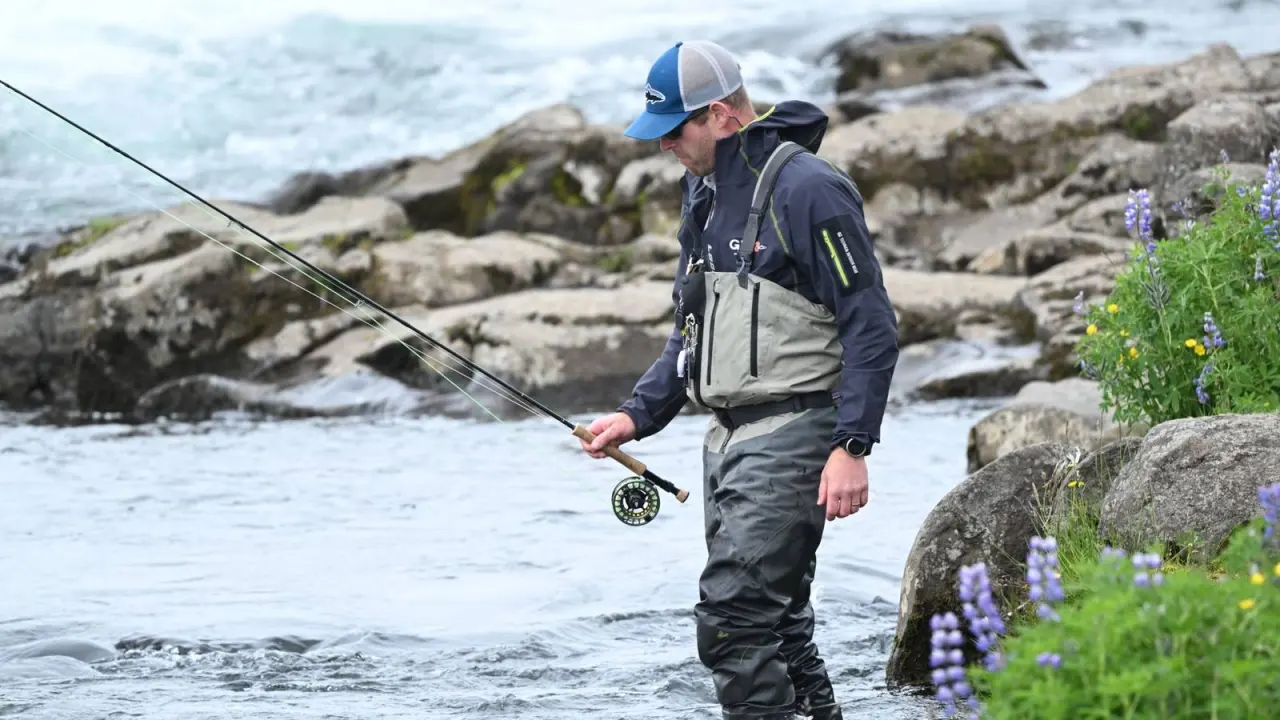
Most wading falls come from small mistakes. Orvis’s advice is to make your moves slow and controlled, to create a wide base on slippery surfaces, and to slide your feet. It also stresses never crossing your feet, noting that a fall usually happens when a foot slips under you or toward the centre of your body (Orvis How To Fly Fish).
Several habits help in moving water:
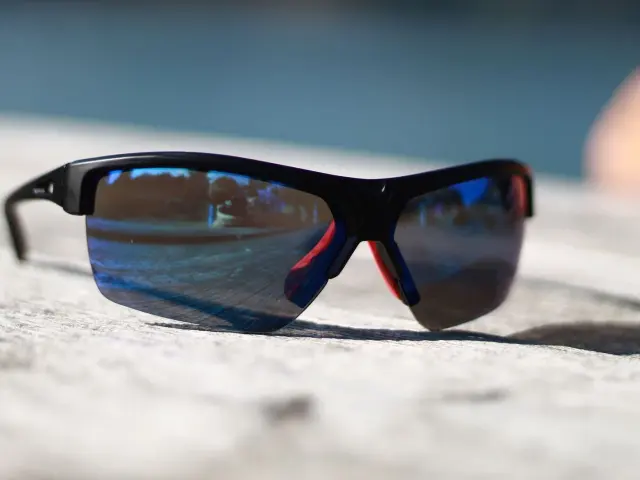
- Never walk where you can’t see where you’re stepping. Seeing the bottom matters, and polarized sunglasses for fishing are covered in their own guide.
- Angle your path upstream, according to the Orvis moving-water guide.
- When you need to turn around in fast water, pivot upstream. Rotating while facing downstream lets the current push you forward, possibly into a deep hole.
- If you must back up, the other Orvis guide suggests feeling behind you with the lead foot, setting it securely, then bringing the other foot into position.
The two Orvis pages differ on the best angle of travel, with one saying to angle upstream and the other favouring a slight downstream angle with the current. Take that as a sign that the right line depends on the river, so choose the route where you feel most stable and can see the bottom.
Using a wading staff properly
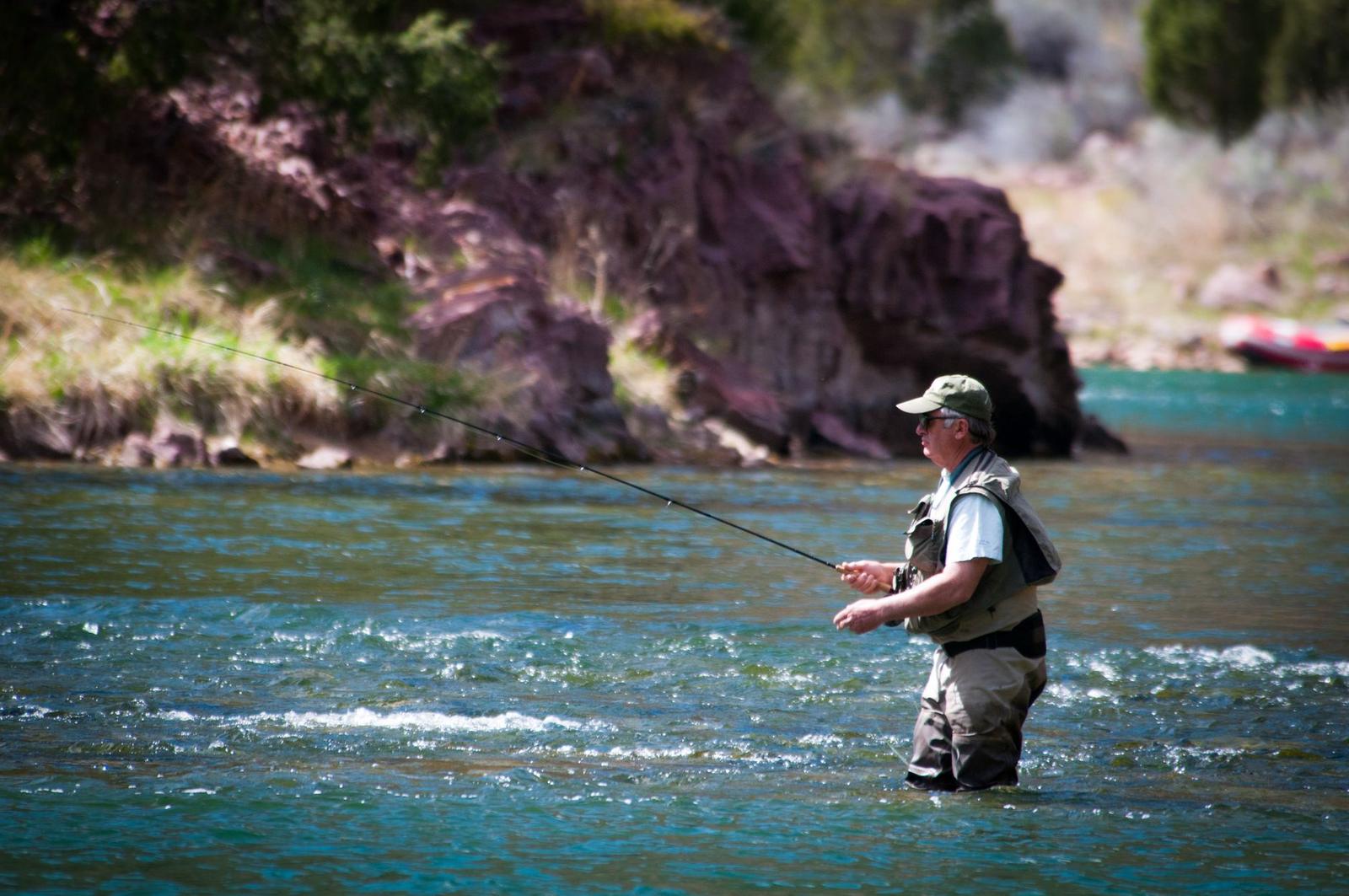
MidCurrent calls a wading staff one of the very best safety devices for people fishing rivers, and notes that many people think they are competent waders who don’t need one. Orvis describes it as a vital third point of support that may make the difference between staying dry and falling in.
Orvis explains that a staff gives three points of contact when you are standing still and two when you are lifting a foot to step. It also says to hold the staff on your downstream side so it offsets the pressure of the current, as set out in the moving-water guide. The same guide says folding models can sit in a sheath hanging from your wading belt, and a sturdy stick from the bank is a good substitute.
Belt, boots and flotation
A wading belt is the simplest safeguard to add to your waders. Orvis says a belt keeps water from filling your waders below the waist in a fall, and MidCurrent says it should be snug so the waders do not fill up right away.
Boots are the other half of staying upright. The Orvis moving-water guide calls wading boots the second line of safety against falls after knowledge and experience, and mentions that felt grips well but dries slowly and can spread invasive species. For the trade-offs between soles, see how to choose wading boots.
On flotation, the Orvis How To Fly Fish guide says a personal flotation device is necessary for waders who can’t swim and may be a good investment for anyone in big rivers and cold water. Orvis also notes that wade anglers rarely, if ever, wear one, so it is a decision you have to make deliberately.
Frequently asked questions
Do I really need a wading belt?
Show answer
Orvis’s wading guide says a belt is mandatory when using waders, because it slows water flowing into the legs and boots and makes escape from the river easier.
Is a wading staff worth carrying if I’m an experienced wader?
Show answer
MidCurrent notes that many people think they are competent and don’t need one, yet calls the staff one of the very best safety devices for river anglers. It is most useful when conditions are difficult.
Can I rely on a cfs number to decide whether to wade?
Show answer
No. The same flow can be easy in a wide channel and harder in a narrow one, so use the number only as a reference for a river you know, and judge the water in front of you.
How deep is too deep to wade?
Show answer
MidCurrent suggests a rule of “don’t wade in water over your calf”. Orvis adds that even knee-deep fast water can sweep you off your feet, so speed matters as much as depth.