Worried about getting caught out when the weather turns? Here is how to layer clothing for outdoor activities: wear a wicking base, an insulating mid-layer and a wind- and rain-proof shell, and leave the cotton at home.
This guide sits within the wider topic of outdoor recreation, with extra notes for anglers who stand in or beside cold water.
| Item | Value |
|---|---|
| Basic system | Three layers: base layer, mid-layer and waterproofs |
| Waterproof rating for a short walk in light rain | 6,000mm |
| Waterproof rating for all day in heavy downpours | 20,000mm and above |
| Breathability for hard effort or heavy sweaters | 15,000g/m²/24hrs or above |
| Cotton in cold weather | Never wear it, including underwear |
Figures come from the OS GetOutside layering guide and UF Health’s cold-weather page. Ratings and recommendations can change, so check the sources before you rely on them.
Why layers beat one big coat
Cold air, wind, rain and even sweat all pull heat away from your skin, according to UF Health. Its advice is blunt: wear several layers of clothing, because that is the key to staying safe in the cold.
OS GetOutside boils the idea down to a three-layer principle: waterproofs on the outside, a mid-layer for warmth and a base layer against your skin. Each layer does one job, so you can add or remove a piece as your effort and the weather change.
- Base layer: moves sweat away from your skin.
- Mid-layer: traps heat close to your body.
- Outer layer: blocks wind, snow and rain.
The base layer: start dry and stay dry
UF Health describes the inner layer as one that wicks sweat away from the skin, and says it can be lightweight wool, polyester or polypropylene. The fabric rule matters more than the brand.
The same page is firm about cotton: “Never wear cotton in cold weather, including your underwear.” It explains that cotton absorbs moisture and keeps it next to your skin, making you cold. Fly Fisherman’s guide to dressing under waders repeats the point, telling anglers not to wear denim or anything cotton.
For close-fitting base layers, Fly Fisherman recommends tight, stretchy synthetic fabric that spreads liquid sweat thinly so it can turn to vapour. It also notes that merino wool works well for fishing base layers.

Mid-layers and shells: warmth and weather protection
Mid-layers insulate and keep heat in. UF Health lists polyester fleece, wool, microfibre insulation or down as options. OS GetOutside calls a fleece one of the most popular mid-layers, and suggests a thicker merino jumper with a wool weight of around 260 as another good choice.
The outer layer should repel wind, snow and rain. UF Health adds a warning: if your outer layer is not also breathable, sweat can build up and make you cold.
Reading waterproof and breathability ratings
OS GetOutside says most waterproofs show a waterproof rating in mm and a breathability rating in g/m²/day. Use the figures below as rough guides.
- Light rain, short walk: a 6,000mm waterproof rating will do the trick.
- All day in heavy downpours, or carrying a backpack: consider 20,000mm and above.
- Hill walking, trail running or heavy sweating: look for breathability of 15,000g/m²/24hrs or above.
- Sunday strolls and daily urban walks: 5,000g/m²/24hrs is sufficient.
OS GetOutside also points to pit zips: underarm zippers that help keep you cool by releasing heat and moisture while keeping the rain out. They are a simple way to vent a shell without taking it off.
Layering for fly fishing and wading
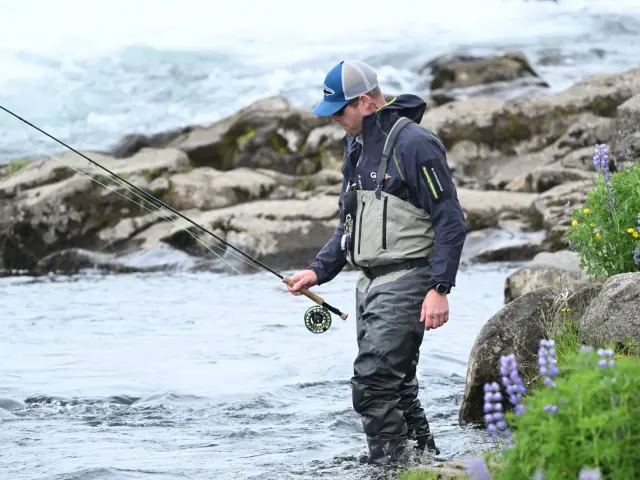
Standing in water changes the problem. Fly Fisherman notes that breathable waders pass moisture vapour from the inside to the outside, but liquid sweat just pools on the inside, so the base layer under waders has to do the moving.
For winter, Fly Fisherman says the system should start with the same tight, stretchy synthetic base layers you wear in summer, then add insulation on top. Your feet need the same thought as your torso, and our notes on how to choose wading boots cover the footwear side.
Wet sleeves and cold hands are part of the day when you follow catch and release fishing tips, so a shell with a good cuff and a spare dry mid-layer in your pack are worth having.
Adjusting as the day changes
Layering only works if you actually change layers. Take a piece off before you start sweating hard, and put it back on when you stop moving.
- Start slightly cool at the trailhead or riverbank, because you will warm up once you are moving.
- Open pit zips or front zips first when you heat up.
- Remove the mid-layer next, rather than letting the base layer soak through.
- Add the mid-layer and shell back on at rest stops, before you feel chilled.
- Keep one dry spare layer for the end of the day.
This is general practice rather than a sourced rule, and your own comfort should guide the timing. UF Health also warns that even mild hypothermia stops your brain and body working as well, so treat feeling cold as a cue to act.
Frequently asked questions
Do I always need all three layers?
Show answer
No. The three-layer principle from OS GetOutside is a framework, and in mild, dry weather you may leave the shell or heavy mid-layer in your pack. The base layer is the one to get right every time.
Why is cotton so bad for outdoor activities?
Show answer
UF Health says cotton absorbs moisture and keeps it next to your skin, making you cold. Fly Fisherman gives the same advice for anglers, saying cotton traps and holds moisture.
Is a fully waterproof jacket always the best choice?
Show answer
Not if it cannot breathe. UF Health notes that sweat can build up inside a non-breathable outer layer and make you cold, so match the jacket to your effort level.
What should go under waders in winter?
Show answer
According to Fly Fisherman, start with tight, stretchy synthetic base layers, add insulation and avoid denim or anything cotton.