Knots feel like the hard part of getting started, but they don’t have to be. Six reliable fly fishing knots cover almost every job: tying on a fly, joining line, and attaching leader to fly line.
For the wider picture of the sport, start with the hub on fly fishing.
| Knot or limit | Key fact |
|---|---|
| Improved clinch knot | Four to six twists around the standing line |
| Improved clinch knot, weak point | Often does poorly in line testing more than 20-pound-test |
| Surgeon’s knot, weak point | Performs poorly in line testing 60-pound-test or stronger |
| Blood knot | Best when both tippet ends already have something attached |
| Triple surgeon’s knot | Better than a blood knot for tippet sizes 0x to 6x |
These figures come from The Catch and The Hatch and Fly Fisherman magazine. Guidance can change and sources disagree in places, so check the source before you rely on any figure.
What each knot is for
Every knot in a fly angler’s kit does one of a few jobs. The Catch and The Hatch lists them: tying on a fishing fly, joining two small pieces of tippet or leader, joining unequal sizes of tippet or leader, tying a leader to your fly line, and tying backing to your fly reel.
This guide covers the six that handle the first four jobs:
- Improved clinch knot: fly to tippet.
- Double surgeon’s knot: leader to tippet, including lines of different thickness.
- Triple surgeon’s knot: the same job, with an extra pass for fine tippet.
- Blood knot: a slimmer join for two lines of similar size.
- Nail knot: leader to fly line.
- Perfection loop: a loop in the leader butt for a loop-to-loop connection.
Trout Unlimited’s Kirk Deeter wrote in a February 2023 post that 99.99% of his fishing involved knowing three knots as easy as tying your shoes. You can start small and add the rest as your rig grows.
The improved clinch knot: tying on your fly
The improved clinch knot is the one you will tie most often. The Catch and The Hatch says there is no more valuable knot to learn, and that it is the knot you’ll use to tie tippet or leader onto a fishing fly.
- Thread the tippet through the hook eye.
- Make four to six twists around the standing line, leaving a small loop between the eye and the twists.
- Bring the tag end back through that small loop, then through the larger loop this creates.
- Draw the tag end down so it lies against the spirals, then pull the knot snug.
Step four matters. Fly Fisherman advises drawing the tag end down against the spirals around the main line before tightening, so the clinch closes correctly.
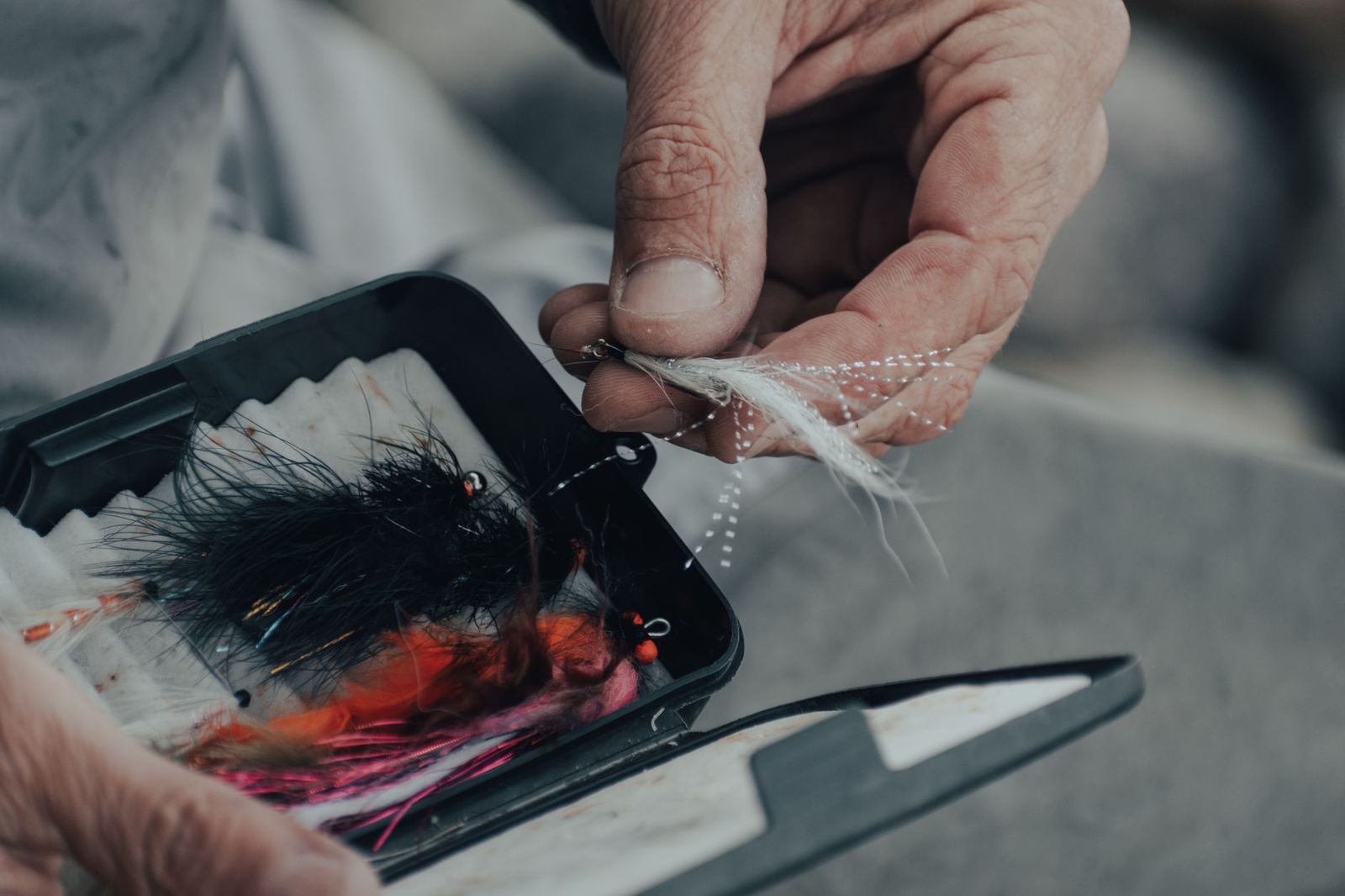
Know its limit. In the same Fly Fisherman piece, the improved clinch often does poorly in line testing more than 20-pound-test. That is rarely a concern with fine trout tippet, but it matters if you move to heavier lines.
Joining line: surgeon’s and blood knots
When tippet runs short, you need a line-to-line knot. The double surgeon’s, triple surgeon’s and blood knots all do this, and anglers argue about which is best.
Double and triple surgeon’s knot
According to Into Fly Fishing, you overlap the leader and tippet by 6 to 8 inches, form a loop with both strands, pass both ends through the loop three times, wet the knot, then pull all four ends tight at once. That three-pass version is the triple surgeon’s. The double simply uses fewer passes.
Trout Unlimited’s writer reports using the double surgeon’s when tying leaders to tippet, and says he has caught 100-plus-pound tarpon with it. An Outdoor Canada author calls it every bit as strong as other options and as easy to tie as shoelaces.
There is a catch. A guide quoted by MidCurrent says that even when formed correctly, a double surgeon’s does not always draw up correctly for maximum strength. The advice there is to test, test, test the knot before it is fished.
Blood knot
The blood knot is one of the first “complicated” connections most fly fishers learn, according to MidCurrent. It becomes easy with practice and makes a slimmer connection.
The Catch and The Hatch says a triple surgeon’s is easier and better than a blood knot, but you can’t tie it if a fly is already on the end of one tippet line. That is when you need a blood knot. The same page adds that for tippet sizes 0x to 6x, the triple surgeon’s is the better choice.
Connecting leader to fly line: nail knot and perfection loop
Many modern fly lines come with a welded loop on the end, but you still have two ways to attach a leader. Trout Unlimited’s Kirk Deeter points to the nail knot for connecting leader to the fly line. He also says that with the built-in loop ends of many fly lines, it is sometimes easier to build a perfection loop and use that to connect to the leader.
Nail knot
Epic Fly Rods lists the supplies as a small metal or plastic tube (or nail-knot tool) and flexible cement such as Pliobond, or a UV glue. In its nail knot guide, you wrap the leader butt over the fly line and tube until you have a total of six wraps. While holding the wraps tightly, you insert the tag end into the tube and push it through.
The same guide notes that the knot needs retying when you change leaders. It also says the connection suits gentle presentations and is very helpful when picking up grass and other floating debris is a concern.
Perfection loop
The perfection loop puts a small fixed loop in the butt end of your leader. It then links to the loop on the fly line, which makes leader changes quick. Deeter says he likes the streamlined, skinny feel of a nail knot, so he often cuts off the welded loops and relies on it. Pick whichever suits how you fish.
Once your rig is built, the next step is learning how to cast a fly rod. And since the fly itself decides what you tie on, it helps to know the types of fishing flies.
Why do knots fail? Habits that make any knot hold
Most failures come from the tying, not the knot. Fly Fisherman says that if a knot requires five turns with the tag and you use four, you may not have enough friction to keep it from slipping. It also says you must tighten firmly all four ends of a line-to-line knot or a weak knot results.
- Count your turns every time, and tie the knot as written.
- Wet the knot before cinching it, as the Into Fly Fishing steps advise for the surgeon’s knot.
- Pull steadily on all ends rather than jerking.
- Test each knot with a firm tug before you fish it.
- Retie a knot if it looks lumpy or the line has been nicked.
Trout Unlimited’s post makes a related point: a well-tied knot is far more effective than any fancy knot recipe. It also notes that if you doubt your knots before you hook a fish, that doubt can affect how you play the fish. Practice at home, with a thick piece of line, until your hands know the steps.
Frequently asked questions
Which knot should a beginner learn first?
Show answer
Start with the improved clinch for tying on flies. The Catch and The Hatch calls it the most valuable knot to learn. Then add a surgeon’s or blood knot for joining tippet.
Is the surgeon’s knot or the blood knot stronger?
Show answer
Experts disagree. MidCurrent collects guides who prefer the blood knot for its slimmer profile, while an Outdoor Canada author says the double surgeon’s is every bit as strong. Whichever you use, test it before you fish.
Do I need a nail knot if my fly line has a loop?
Show answer
No. Trout Unlimited’s Kirk Deeter says that with built-in loops, it is sometimes easier to tie a perfection loop on your leader. He still prefers the nail knot for its streamlined feel.
Why did my improved clinch knot slip or break?
Show answer
Check the turns and the tightening first. Fly Fisherman says too few turns may leave too little friction, and that the improved clinch often does poorly in line testing more than 20-pound-test.