Wondering whether fly fishing is too tricky to try? It isn’t. You need a rod, a heavier line, an almost weightless fly and some casting practice, plus the right licence for your water.
| Item | Value |
|---|---|
| Where fly gear is most commonly used | Rivers for salmon or trout |
| Weight of the flies | Almost weightless (the heavier line allows for casting) |
| Separate fly fishing licence in Canada | Not generally used (as of the October 26, 2026 guide update) |
| Ontario Fisheries Management Zones | 20 zones |
| Ontario Outdoors Card validity | Three years |
| B.C. non-resident classified-water licence | Generally up to 8 consecutive days |
These figures come from the Ontario government’s Learn to Fish online program and a Canada fishing-licence guide updated October 26, 2026. Rules and fees can change, so check the source before you rely on them.
What is fly fishing, and how is it different?
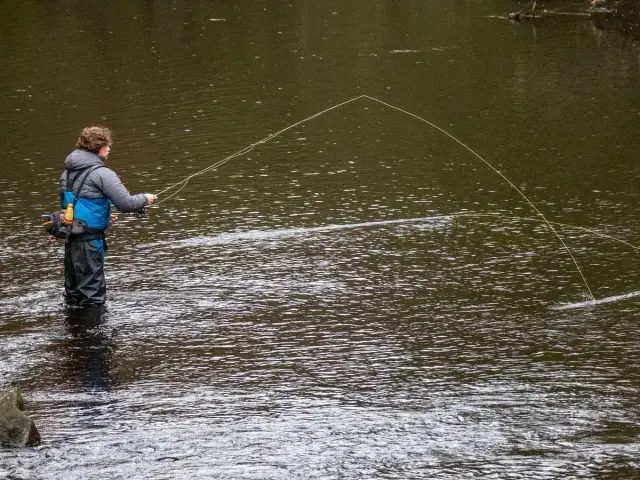
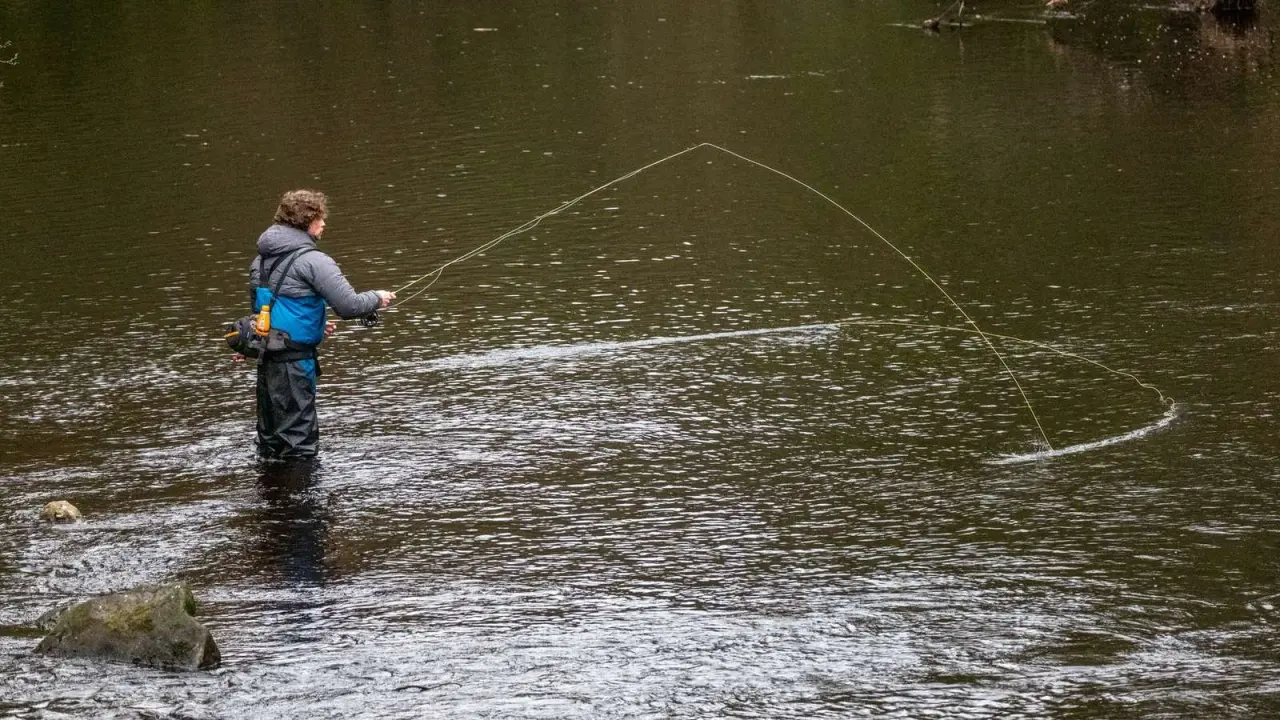
Fly fishing is a way of casting a nearly weightless fly by using the weight of the line. The Ontario government’s Learn to Fish program calls fly gear “completely different from other fishing equipment” and says it is most commonly used when fishing in rivers for salmon or trout.
In practice, the flies are almost weightless, while the heavier line allows for casting. Spoons and spinners work the other way round: according to the Ontario learn-to-fish guide, their own weight allows for more accurate casting.
The same program describes the style as fun and rewarding but says it needs a lot of practice. Treat your early outings as practice sessions, not a test of how many fish you land.
Here is how the Ontario guide sorts the common setups, so you can see where fly gear sits.
| Setup | How the Ontario guide describes it |
|---|---|
| Spinning | Recommended for beginners: relatively inexpensive and simple to use |
| Spincasting | Button release is easy for children, but the closed-faced rods make untangling line more difficult |
| Bait-casting | Prone to tangle; recommended for more advanced anglers |
| Fly | Fun and rewarding but needs a lot of practice |
The setup descriptions above are summarised from the Ontario government’s Learn to Fish online program; check it for up-to-date guidance before you buy gear.
For a step-by-step route into the sport, read how to start fly fishing next.
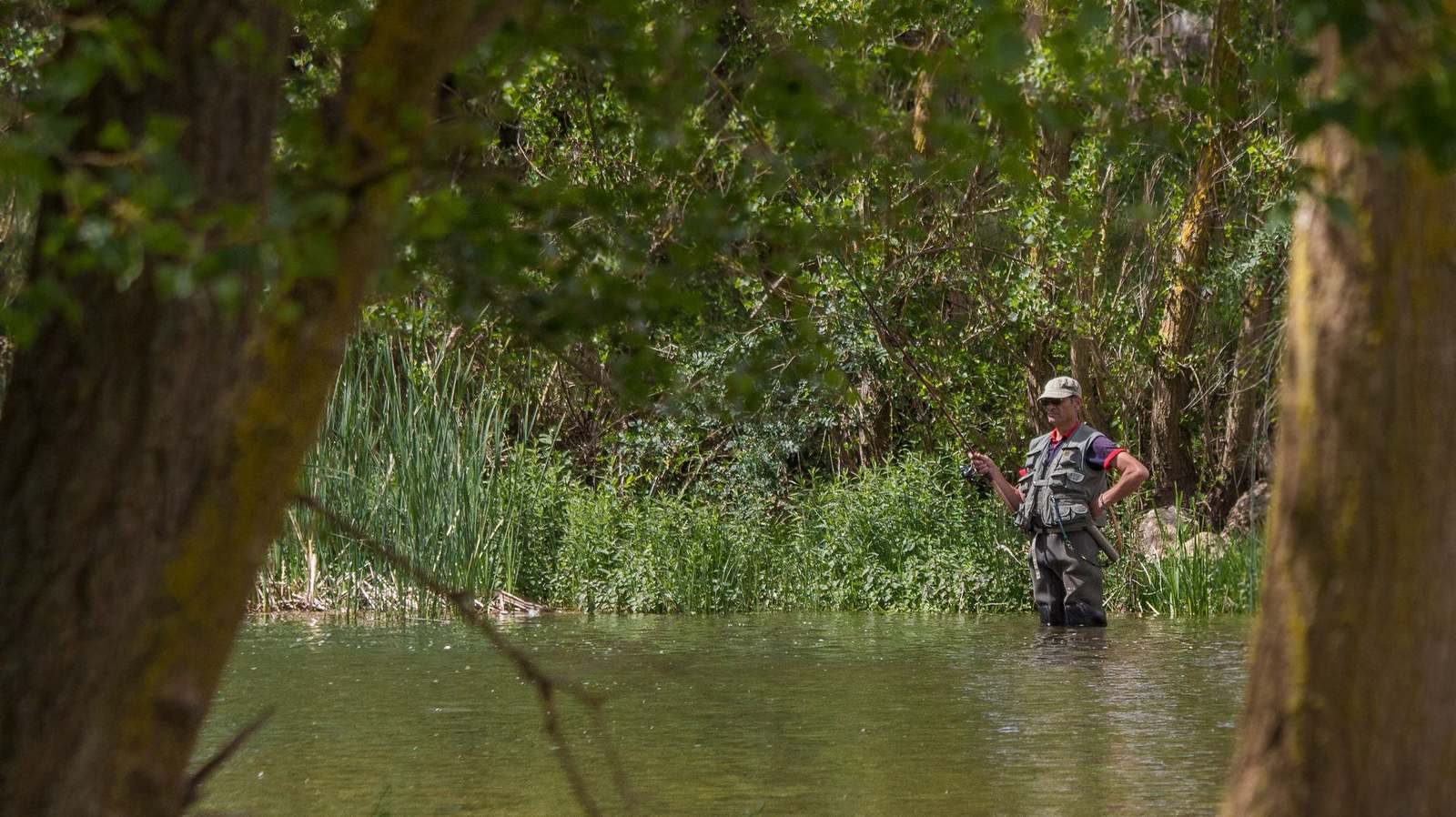
The basic gear for fly fishing
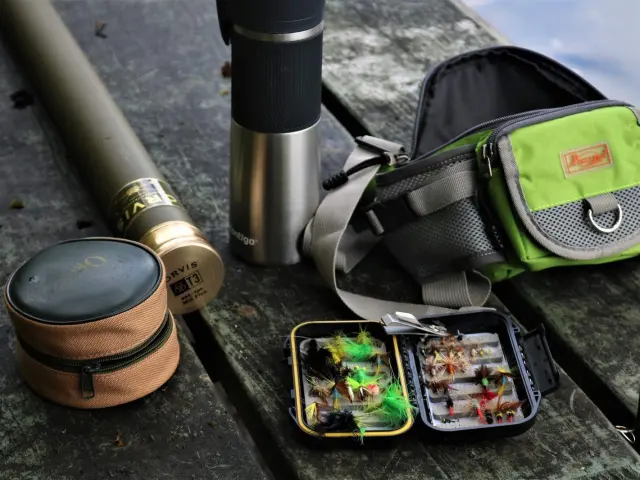
A fly outfit works as a system of rod, reel, line, leader and flies. The Ontario guide admits that choosing a rod and reel can seem overwhelming because of the broad selection in shops. A short list keeps it manageable.
- Rod and reel: Read how to choose a fly rod before you buy, because the rod shapes every other choice.
- Fly line: Use a fly line weight chart to match the line to your rod.
- Leader and tippet: This is the section between your line and the fly, and the guide to fly fishing leader and tippet covers how to set it up.
- Flies: These are the lures of fly fishing, and the Ontario program calls them almost weightless.
- Extras: Needle-nosed pliers, a net, scissors or nail clippers and a first aid kit all appear on the Ontario guide’s gear list.
On leader material, the Ontario guide says fluorocarbon is a bit more expensive than monofilament and is often used as leader material near your lure. It adds that fluorocarbon appears almost completely transparent underwater.
For a full shopping list, see fly fishing gear for beginners.
Casting, knots and flies
Casting is where most beginners spend their first weeks, because fly gear needs a lot of practice. The guide on how to cast a fly rod covers the motion step by step.
Ontario’s online program gives knots and casting a lesson of their own. The other lessons cover rules and regulations, fishing equipment, fish identification and invasive species, and tips, safety and ethics. Every connection between line, leader and fly depends on a knot, so learn a few reliable ones from fly fishing knots.
Choosing flies can feel like choosing lures, which the Ontario guide says “sometimes seems like there are endless options”. Start with a handful of patterns, and browse types of fishing flies to see how they differ.
Fly gear is most commonly used in rivers, so learning to read moving water pays off quickly. The guide on how to read a river for fishing is a good next step once you can cast.
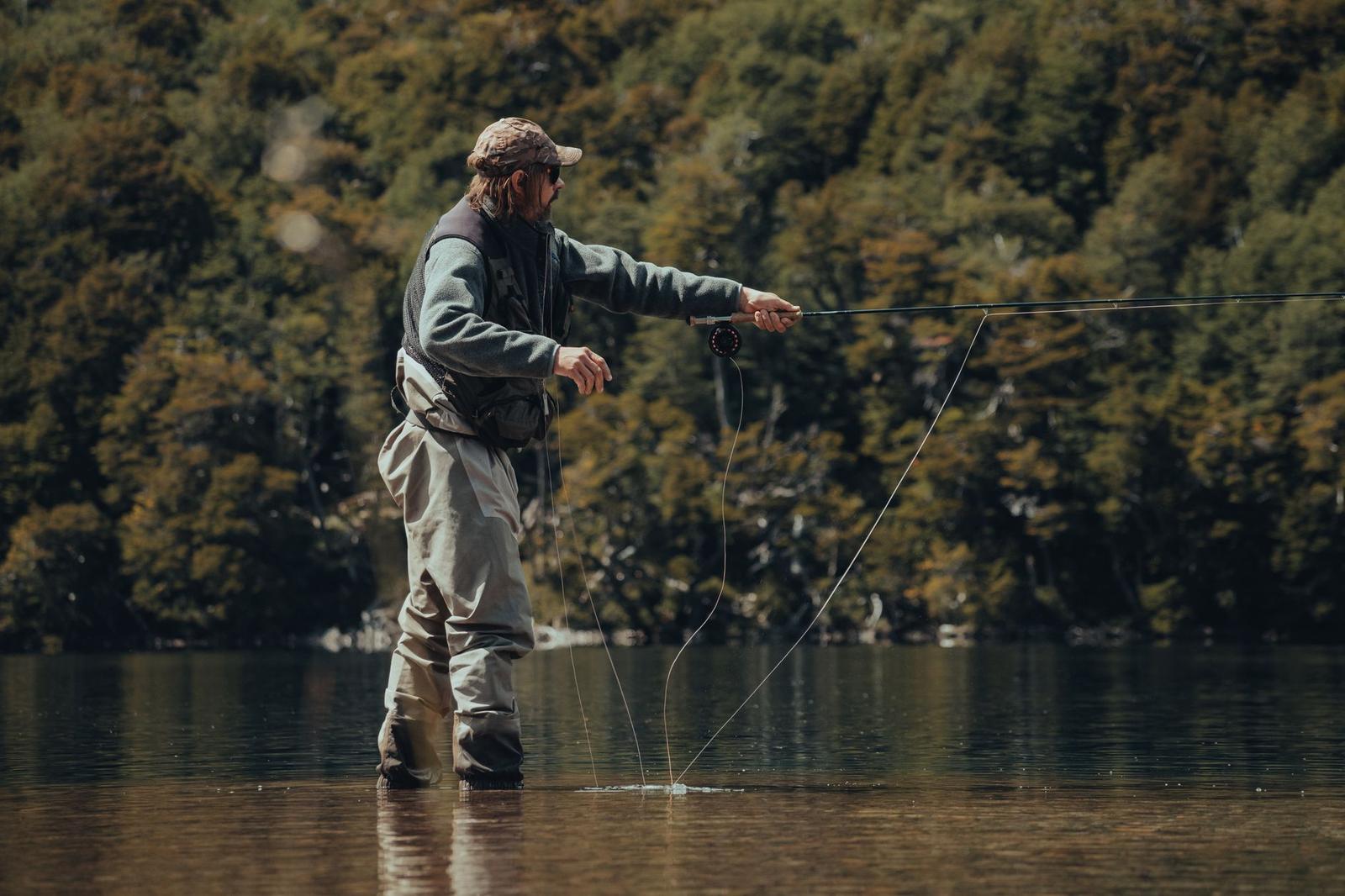
Fly fishing licences across Canada
There is no national fly fishing licence to hunt for. A Canada fishing-licence guide, in its October 26, 2026 update, says the ordinary recreational licence usually covers spinning, bait and fly alike.
What changes is the water. The guide’s advice is to start with the water, then match the licence path to the water.
| Rule branch | What can change |
|---|---|
| Base freshwater licence | The ordinary provincial licence is enough for many trout, bass and general freshwater fly trips |
| Method restrictions | Some rivers or sections are fly-fishing-only, single-barbless only, bait-ban waters or catch-and-release waters |
| Species-specific additions | Steelhead, salmon and some retained species can require extra stamps or a separate salmon licence |
| Separate management systems | B.C. tidal waters, national parks and some controlled salmon waters use a different permit or access path |
The rule branches above are summarised from the Canada fishing-licence guide as of its October 26, 2026 update; rules differ by province and can change, so check the official source before you plan a trip.
British Columbia shows the pattern most clearly. Freshwater licences are linked to your Fish and Wildlife ID (FWID) profile, and anglers must carry their FWID and photo ID while fishing, according to the same guide.
On some rivers, B.C. can require a Classified Waters Licence, a Steelhead Conservation Surcharge Stamp or a Salmon Conservation Surcharge Stamp, depending on the river, species and season. For non-resident anglers, the guide says classified-water licences are water-specific and date-specific, generally for periods of up to 8 consecutive days.
Other provinces add their own twists. The guide says Quebec keeps ordinary sport fishing and salmon fishing on separate licence paths, and a non-resident salmon trip in New Brunswick can add guide-required access rules.
Steelhead trips raise questions of their own, so the comparison of steelhead vs rainbow trout is a useful next read.
For a wider view of where people fish across the country, see fishing in canada. If fly fishing is part of a bigger interest in time outside, outdoor recreation is the place to browse.
Ontario’s rules as a worked example
Ontario’s government publishes beginner material, so it makes a handy worked example of how provincial rules fit together. Other provinces have their own rules, so check the relevant government pages for your trip.
- Regulations Summary: The Ontario Recreational Fishing Regulations Summary includes a map that divides Ontario into 20 Fisheries Management Zones. Find your zone to see species limits, seasons and extra rules for specific waterbodies.
- Your responsibility: The program states that it is your responsibility to make sure you are fishing according to the regulations.
- Licence types: There are two kinds, Sport and Conservation. A Sport licence allows anglers to keep more fish, and a Conservation licence allows for a reduced catch limit.
- Exemptions: Canadian residents under the age of 18 or 65 and older don’t need to buy a fishing licence.
- Outdoors Card: Before you purchase a fishing licence, you will need an Outdoors Card, which lasts for three years.
If you plan to practise catch and release, the Ontario program recommends a Conservation licence. You can read the full rules in the Learn to Fish online program.
Fishing responsibly and handling fish
Good habits protect the fish you want to see again. The Ontario guide notes that hooks usually have barbs, which can be bent down to help release fish faster.
It also warns that you aren’t allowed to use barbed hooks in some waterbodies. The licence guide adds that some rivers or sections are single-barbless only, so check the rules for your water before you tie on a fly.
- Use needle-nosed pliers to bend down barbs and to release deeply hooked fish, as the Ontario guide suggests.
- Put your net in the water, guide the fish overtop, and either raise the net or take out the hook while the fish is still in the water.
- Read the waterbody’s rules before you fish, because Ontario’s guide says specific waterbodies can carry extra rules.
These small steps cost nothing and make release faster. You can find the full guidance in the Ontario learn-to-fish guide.
Frequently asked questions
Do I need a special licence for fly fishing in Canada?
Show answer
Usually not, so start by checking the water you plan to fish. On B.C. classified waters, for example, you may need a Classified Waters Licence, according to the October 26, 2026 update of this licence guide; confirm the rules for your river before you go.
Is fly fishing hard for beginners?
Show answer
The Ontario program calls the style fun and rewarding but says it needs a lot of practice. It recommends spinning setups for beginners as relatively inexpensive and simple to use, so some newcomers try both.
Can children try fly fishing?
Show answer
The Ontario guide says spincasting rods have a button release that makes them easy for children to use. For spinning, it suggests children start with a shorter rod, about 4-5 ft (approximately 1.5 m).
Where can I learn the rules and basics for free?
Show answer
The Ontario government offers a Learn to Fish online program with videos, quizzes and other resources. A text-based version is available as the Learn to Fish guide.