Staring at a river and seeing only moving water is normal. To learn how to read a river for fishing, look for slower water beside faster current, with food drifting past and cover nearby.
This guide is part of the wider fly fishing series and focuses on finding fish before you cast.
| Item | Value |
|---|---|
| Typical riffle depth | Six inches to about three feet |
| Typical run depth | Two to five feet |
| Basic categories of trout lies | Three: feeding, sheltering and prime |
| Water temperature when trout seek the deepest lie | Above 70 degrees |
| Best-known food source in a riffle | The river’s “food factory” |
These figures come from a water-types guide and a guide to trout lies. Depths and temperatures vary by river, so check the sources before you rely on them.
What a fish is looking for in moving water
A trout in a river balances two needs: food and shelter. It wants a spot where the current brings a steady supply of insects, but where holding still costs little energy.
That is why fish rarely sit in the fastest water or the dead-slow middle of a pool. They sit where food and slower water are close together.
Read any stretch by asking three questions:
- Where is the current bringing food?
- Where is the water slow enough to rest in?
- Where is the cover, such as depth, rocks, logs or an undercut bank?
Where all three overlap, you have found a place worth a few careful casts.
Riffles, runs and pools: the three big water types
Most rivers are a repeating chain of three water types. Learning to tell them apart gives you a first map of where fish are likely to be.
Riffles
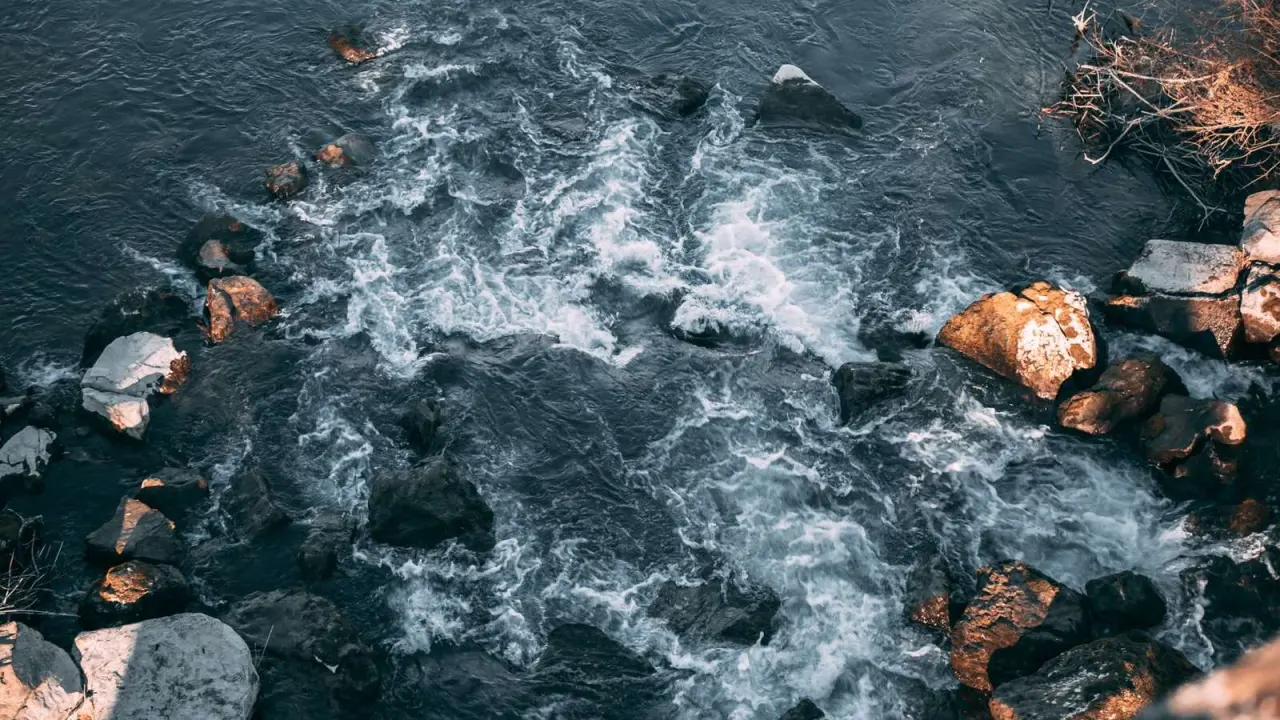
Riffles are fast, shallow, broken water. According to one water-types guide, depth typically runs from six inches to about three feet, and riffles are “the river’s food factory.”
The broken surface also adds oxygen, which is why riffles become especially important in summer when warmer water holds less dissolved oxygen. Fish move in when the food supply justifies the effort of holding in faster current.
Runs
Runs are the moderate-depth sections connecting riffles and pools, and the same guide puts their depth at two to five feet. It calls them the most reliable all-around water type on most rivers, because they often have seams along the edges and subtle bottom structure that concentrate fish in specific lanes.
Pools
Pools are the deepest, slowest sections, often at the end of a run or below a riffle. The guide notes that pools offer energy conservation, especially in cold water, and that in winter and early spring they are often where the largest concentrations of fish will be found.
Don’t treat a pool as one uniform body of water. The guide advises looking for current lanes, bubble lines and seams inside it.
Where fish hold inside each stretch
Once you know the water type, narrow down to the seams, the lines where fast current meets slow.
Here is where to look in each stretch:
- Riffles: the slower water beside the fastest chute, where a fish can hold close to the food.
- Runs: the seams along the edges and any lane where the bottom changes.
- Pools: the bubble lines and seams inside the pool, rather than the pool as a whole.
- Tailouts: the downstream end of a pool, where water picks up speed before the next riffle or run.
One guide’s river breakdown, from a fly-fishing guide site, describes tailouts exactly that way and adds a useful warning: fish in tailouts can be more wary, so observe before casting.
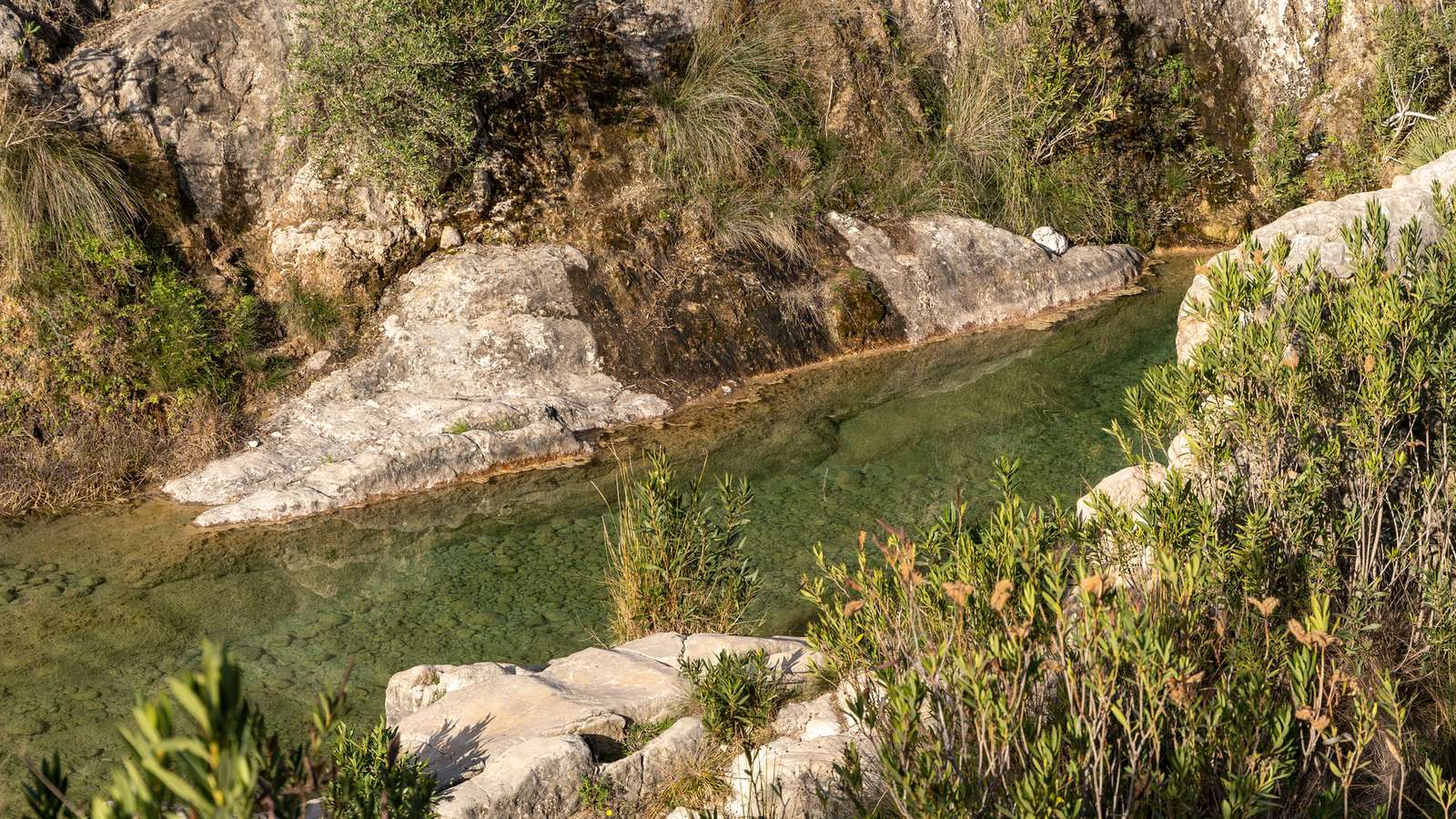
Your presentation matters once you have picked a lane. A well-matched fly fishing leader and tippet helps the fly drift naturally through the seam instead of dragging across it.
How do feeding, sheltering and prime lies differ?
Anglers call the spots where fish hold “lies.” MidCurrent’s guide sorts trout lies into three basic categories, and each one suggests a different approach.
- Feeding lies offer food but little overhead protection. Shallow water and shallow riffles are the guide’s examples, and fish there are often wary but busy eating.
- Sheltering lies give protection rather than food. When water temperatures exceed 70 degrees, the guide says trout will seek the deepest lie in a river, so the deepest part of a pool is usually a sheltering lie.
- Prime lies combine shelter and feeding at once, and the guide says the strongest and biggest trout end up there.
Undercut banks with current pulling toward the bank are a favourite prime lie, because the bank provides cover and the current brings the food right to the trout. The same guide warns that a prime lie is sometimes the most difficult spot to place a fly.
A simple routine for a new stretch
Before you step in, spend a few minutes on the bank. Fish the water you would otherwise wade through first.
- Identify the water type in front of you: riffle, run, pool or tailout.
- Find the seams and current breaks such as boulders, logs and undercut banks.
- Pick the lane where food, slow water and cover overlap.
- Work the nearest water first, then move upstream or out into the stream.
- Change your approach with the season: riffles and deep water matter more in warm weather, and pools matter more in cold.
If you fish rivers with sea-run fish, the steelhead vs rainbow trout comparison explains how the two relate, and the water-reading principles above still give you a starting point.
Frequently asked questions
What is a seam in a river?
Show answer
A seam is the line where fast current meets slow current. Seams along the edges of a run concentrate fish in specific lanes, which is why they are a good first thing to look for.
Where do trout go when the water gets hot?
Show answer
According to MidCurrent, when water temperatures exceed 70 degrees trout will seek the deepest lie in a river. Riffles also matter in summer because the broken surface adds oxygen.
Is the middle of a pool a good place to fish?
Show answer
Not always. The deepest part of a pool is usually a sheltering lie, so the seams and bubble lines inside the pool are worth reading before you commit to one spot.
Which water type is the best all-around choice?
Show answer
One water-types guide calls runs the most reliable all-around water type on most rivers. Rivers differ, so treat that as a starting point and not a rule.